I checked every animal
against its source.
Bison have hurt more Yellowstone visitors than bears, and a man in Florida was killed by his own cassowary in 2019. Every claim in this 2027 guide has a verdict and a named source, so you know what is true, what is exaggerated and what is a myth. It covers the animals that were never meant to be pets, the ones no zoo dares to keep, and the most dangerous animals in America, with what to do after a bite.

Here is what the record actually shows.
Wild Watch Field GuidesOne field guide. Nine chapters. Thirty-nine checked sections.
Online videos make animals bigger, meaner and stranger than they are. This book takes the claims you have heard, checks the numbers against real sources, and tells you plainly what is true and what is myth. Then it tells you what to do after a bite, a sting or a charge.
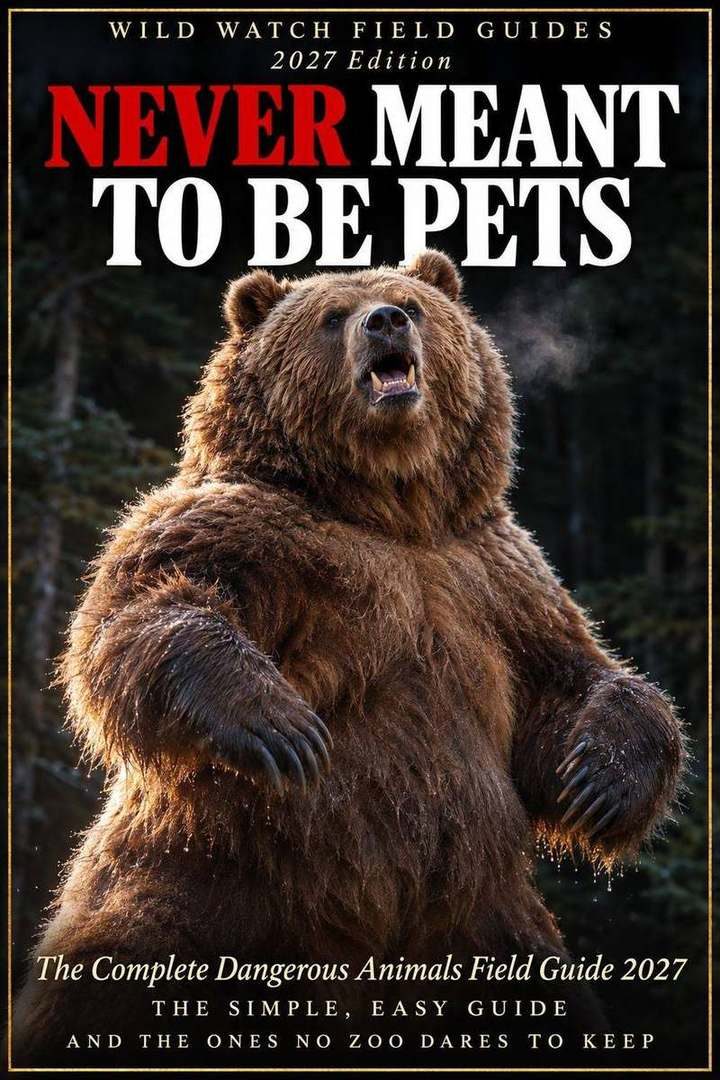
What is true about dangerous animals, and what to do about it, written down.
You can see which animals really cause the most deaths in America, ranked. You can learn what to do when a dog attacks, when a cougar stares you down, or when a bison will not move off the trail. You can tell a widow or recluse bite from the myths that scare people for nothing. And before anyone in your family buys a serval, a python or a mini pig, you can check the questions and the laws first.
- The Complete Dangerous Animals Field Guide 2027 — 266 pages, PDF$47.90
- Yours to keep: the PDF and its quick referenceincluded
- You pay today$47.90
Exactly what you get for $47.90.
Nine chapters, in plain words, set in the United States: pounds, feet, miles and state laws. Each chapter takes one group of animals, checks what the videos say, and keeps only what the record supports.
The real death rankings, and how videos inflate animals.
- The insect that killed 16 times more Americans than all snakes
- Why 478 brown recluse bites came from a state with one recluse
- The four questions that expose any inflated animal number online
- What a 2013 swab of 16 Komodo mouths really found
- The state where your odds of an animal crash claim are 1 in 46
Which dogs wreck a home, and first aid after bites.
- The one person missing from 87% of fatal dog attacks
- Why mixed-breed labels matched a dog's DNA only 10% of the time
- The vaccine gap that makes a wolfdog bite your neighbor's problem
- The 5-year tetanus rule after a bite that most farmers miss
- The five-line test that tells you a Malinois is wrong for you
- The only dog breed with six toes on each foot
The bulls, sows and geese that hurt farmers, and the rules.
- The two months when a third of cattle deaths happen
- The one rule that might have saved a third of these farmers
- How a single rooster peck killed a 76-year-old woman
- The 'teacup' pig that can weigh 150 pounds and live 20 years
- The two ways an ostrich injures a handler, both from the front
- Why the fainting goat never actually faints
Venom made plain, and what to do after a bite.
- Why a quarter of pit viper bites are dry, and still dangerous
- The 8 snakebite steps to read before your hand swells
- Why the 'nerve vs. blood' venom label misleads you
- What to do with a cold-stunned iguana on your lawn
- The 1975 rule that prevents about 100,000 Salmonella infections a year
- The lizard that shoots blood from its eyes up to 3 feet
Servals to cougars, and how to face a cougar.
- The cat bite that put 1 in 3 patients in the hospital
- The one move every agency forbids when you meet a cougar
- The pet cat that can jump more than 9 feet straight up
- The 1-to-3-week warning sign after any cat scratch
- The federal big-cat law that can cost $20,000 and 5 years
- The word that decides if Colorado pays for your lion losses
Why parrots are a decades-long commitment, and which birds hurt.
- The age arithmetic to do before buying a 30-year macaw
- The 4-inch toe claw a cassowary can aim at your chest
- The 3 things a pet trust needs to protect your parrot
- The 135-decibel parrot to hear before you sign a lease
- Why the bird with toxin 'deadlier than cyanide' won't kill you
- What to do when an owl swoops on your path
Which spider bites are real, and why stingers matter more.
- The 'spider bite' that is really an infection needing antibiotics
- The Kansas house with 2,055 recluses and no bites in 8 years
- The 5-day window that decides Rocky Mountain spotted fever
- The sting treatment you must never use on a scorpion
- Why one epinephrine pen falls short about a third of the time
- The tank-cleaning habit that saves your eyes from tarantula hairs
Bear spray, distance, and when to run from bison or moose.
- The one hiking habit behind 91% of Yellowstone bear injuries
- What 80% of people hurt by Yellowstone bison did first
- Spray, run or leave: three animals that need opposite moves
- The 3 moose warning signs that mean you are already too close
- Kodiak or polar bear: which is really heavier, checked
- The hog disease 8% carry that hunters can bring home
The quick reference, and the laws to check before buying.
- The 6 questions to answer on paper before buying any exotic pet
- The one-page chart to photocopy and tape where you need it
- What a seller's 'nobody enforces that' really means for you
- The 3 rules that hold for every animal in this book
- The insurance question to get answered by email before you buy
Wild Watch Field Guides.
Wild Watch Field Guides is a small team, not a single person. They take the most astonishing claims about dangerous animals and check every number against a real source: wildlife agency reports, published bite and attack data, court and news records of real cases, and the guidance of state wildlife departments, the CDC and Poison Control. They claim no degrees, no titles and no expeditions. What they do is read the record.
This is not a book of scary stories, and it never inflates an animal to make a better one. It is written for readers who already know a lot, many of whom grew up on dairy farms and ranches or have kept cats, snakes and birds for decades. When the reader is probably right, the book says so. When no reliable figure exists, it says that too and does not invent one.
$47.90 once. No subscription. Yours forever.
You get the PDF right after checkout and can read it on your phone, tablet or computer, or print it. If it is not for you, the 7-day money-back guarantee covers you.
The Complete Dangerous Animals Field Guide 2027
One field guide of 266 pages, nine chapters and 39 checked sections, from the death rankings to the quick reference. You pay once and keep the file.
Questions buyers ask before they click.
I grew up around livestock. Will this tell me anything new?
Probably some of it you already know, and the book says so plainly. What it adds is the checked record across nine chapters, from wolfdogs and Everglades pythons to tarantulas and Kodiak bears, with the myths sorted from the facts.
I am not a scientist. Is it hard to read?
No. It is written in plain words and short sentences. Venom, for example, is explained simply, without the jargon.
Is it about the animals where I live?
Yes. The book is set in the United States, with pounds, feet and miles, state wildlife and exotic-pet laws, and the animals Americans actually meet, from snapping turtles and bison to the exotic cat a neighbor bought online.
Will it tell me what to do if I meet one of these animals?
For many of them, yes. There are sections on dog attacks and first aid after a bite, livestock safety, reptile bites, meeting a cougar, arachnid bites and stings, and meeting a bear, bison or moose. It is a guide, not a substitute for 911 or Poison Control in an emergency.
How do I get it, and how fast?
It is a PDF. You can download it right after checkout and open it on any phone, tablet or computer, or print it.
How long is it?
266 pages in nine chapters and 39 sections. You can read it straight through or go to the animal you care about.
What if it is not for me?
You have 7 days to ask for your money back. Just ask within that time.
Know the real danger before you meet it.
$47.90 once, instant PDF download, 7-day money-back guarantee. One look at your state's exotic-pet law before a purchase can cover the cost of the book.
Get it free: The Most Surprising Animal Facts, Checked
A short PDF from the same book. Enter your email on the next page and it lands in your inbox right away.